
Shopping Centre Food Waste Management System
At one Sydney shopping centre processing around four tonnes of food waste a week, Biofeed reduced collections from six food waste bin collections a week to one Biofeed pumpout a week.
Book my free site assessmentOne sealed tank instead of a waste room full of food waste
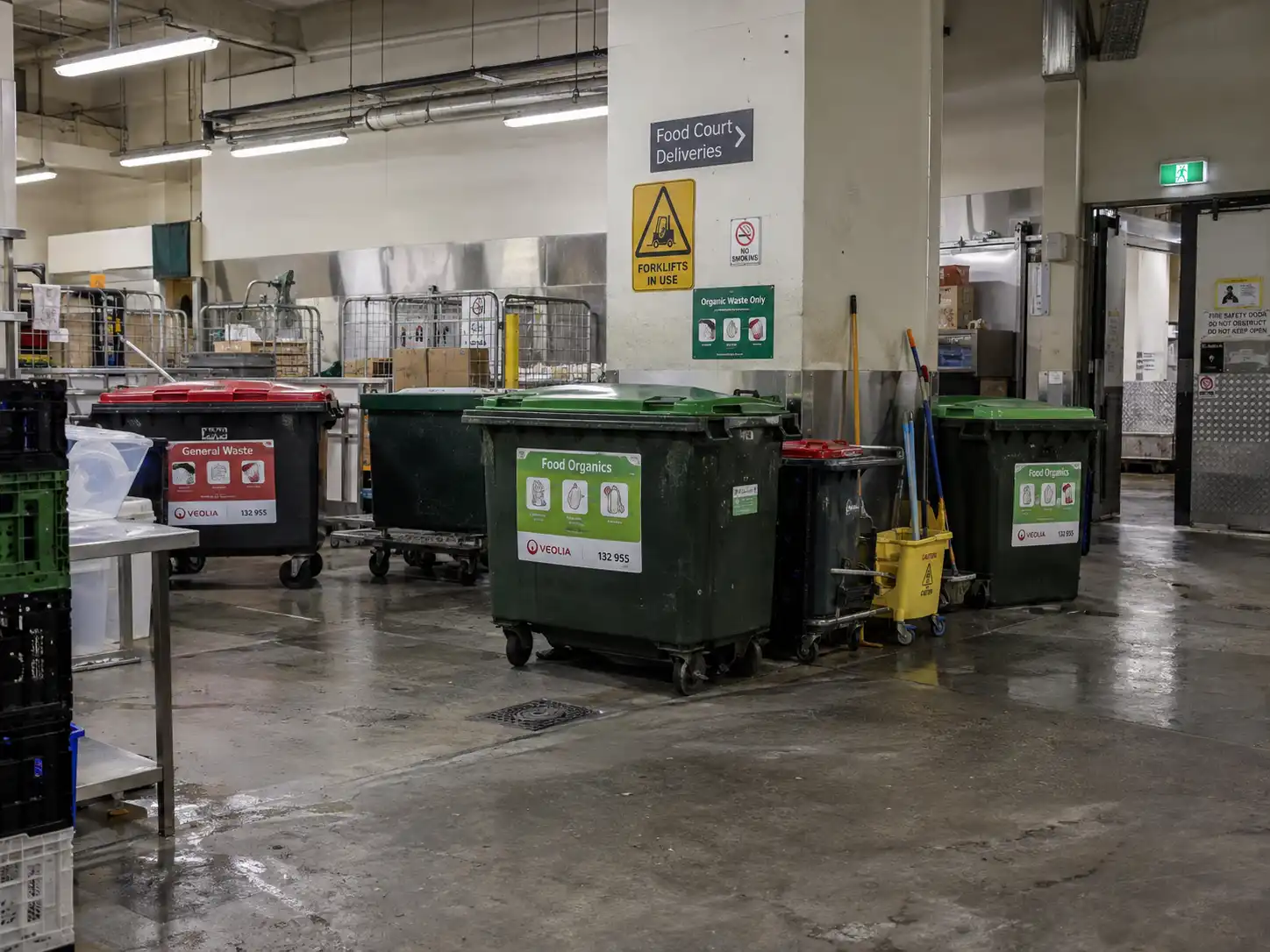
Food waste in a shopping centre comes from dozens of tenants and lands on one loading dock. Food court operators, cafés, restaurants, supermarkets and fresh food retailers all put heavy, wet, putrescible waste through the same waste room.
Each bin movement costs staff time. Each lift costs money, and a waste room full of food waste takes space the dock needs for deliveries.
Biofeed gives centre management a practical on-site system. It macerates source-separated food waste into a pumpable liquid, holds it in a sealed tank and notifies you or your waste contractor when the tank needs a pumpout.
The result is one tank in place of a row of bins, with collections booked on real volume rather than a fixed run.

Dozens of tenants, one loading dock
Most of a centre's waste is dry, stackable and slow to cause trouble. Food waste is heavy, it leaks, it smells within a day and it draws pests.
In a centre it comes from every direction:
✓
Food court plate scrapings and prep waste
✓
Café, restaurant and takeaway kitchen waste
✓
Supermarket, bakery, butcher and deli trimmings and markdowns
✓
Fresh produce that fails on the shelf
✓
Event and promotion catering
Every stream has to be kept out of general waste and recycling if it is going to be diverted. Then it has to be moved, stored and collected without the dock becoming a problem for the whole centre.
Biofeed is built for exactly this handling problem. It processes food waste at the dock or in the waste room and sends it to a sealed tank, so the centre stores liquid in one place instead of solids in many bins.
What goes wrong when food waste sits in bins
General waste, cardboard and recycling sit in bulk bins and compactors without much trouble. Food waste in bins causes a predictable set of problems.
OH&S risks: Tenant staff and cleaners push heavy, leaking bins through service corridors, goods lifts and the dock.
Odour and pests: A shared waste room with open or overflowing food waste bins is the first place a pest problem starts.
Dock congestion: Bins waiting for collection take the space that deliveries, waste trucks and tenant movements need.
Per-lift charges: Food waste bins fill fast and smell faster, so they are collected often and every collection is a lift on the invoice.
No tenant data: One shared waste room means nobody knows which tenant produced what, so costs get spread rather than allocated.
The bigger the centre, the faster these problems compound. Biofeed moves processed food waste into a controlled tank system and cuts the number of bins the centre has to handle.
Use the Biofeed savings calculator to estimate how much your centre could potentially save on food waste collection.
Use the Commercial Food Waste CalculatorBuilt for a multi-tenant site
Shopping centres produce food waste in waves: lunch service, dinner service, end-of-day clean-down and weekend trade. Biofeed is configured for the site, not sold as a fixed box.
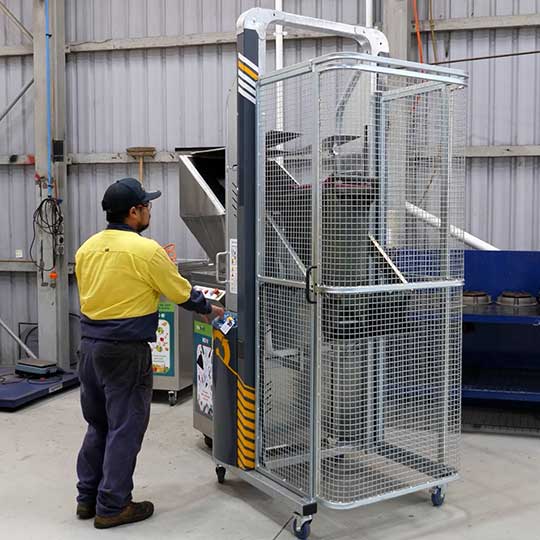
Bin lifter loading: Electric bin lifters take standard 80L, 120L and 240L tenant bins, so staff tip a bin and press one button. Manual loading suits smaller streams; auger feed suits very high volumes.
Siting around the dock: The unit can sit in the waste room or at the dock, with the tank placed where space allows. Slimline tanks, tank stands and remote tank locations are all proven configurations, and plumbing runs of around 90 metres have been installed.
Tenant access control: Optional FOB access logs each load against the tenant that made it, which turns a shared bin store into a measured service.
Simple operation: One button to run, with onsite training and training videos for tenant staff and cleaners.
This makes Biofeed suitable for centres that need more than a bigger bin. It is built for shared docks, many users and the volumes a food court actually produces.
How Biofeed supports organics recovery and the circular economy
The process is straightforward and hygienic.
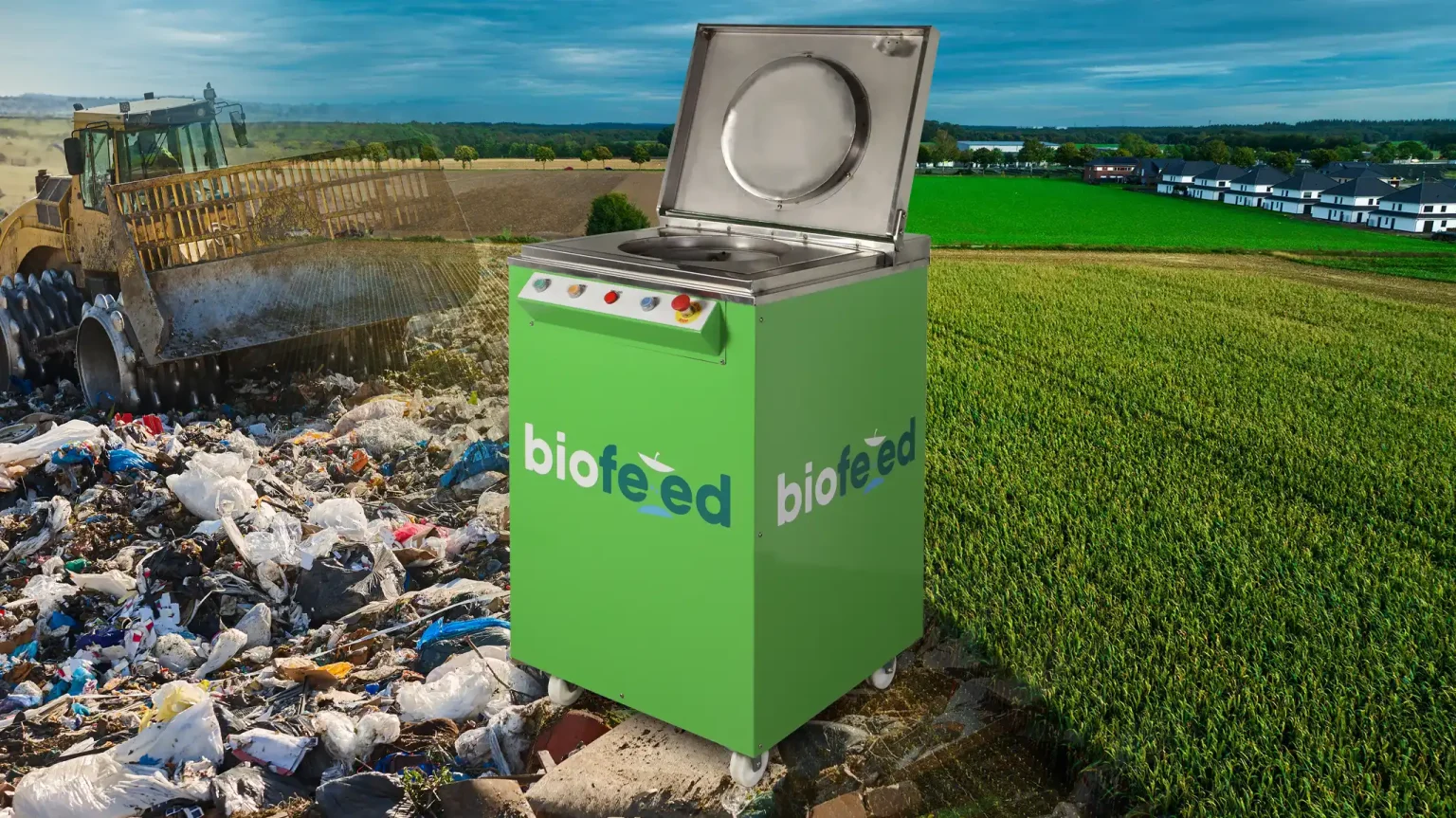
Source-separated food waste, free from packaging, cutlery and plastics, is loaded into the Biofeed unit. The machine macerates it with water into a semi-solid, pumpable liquid.
That liquid is pumped to a sealed holding tank. A vacuum truck collects it and takes it to an approved organics recovery facility.
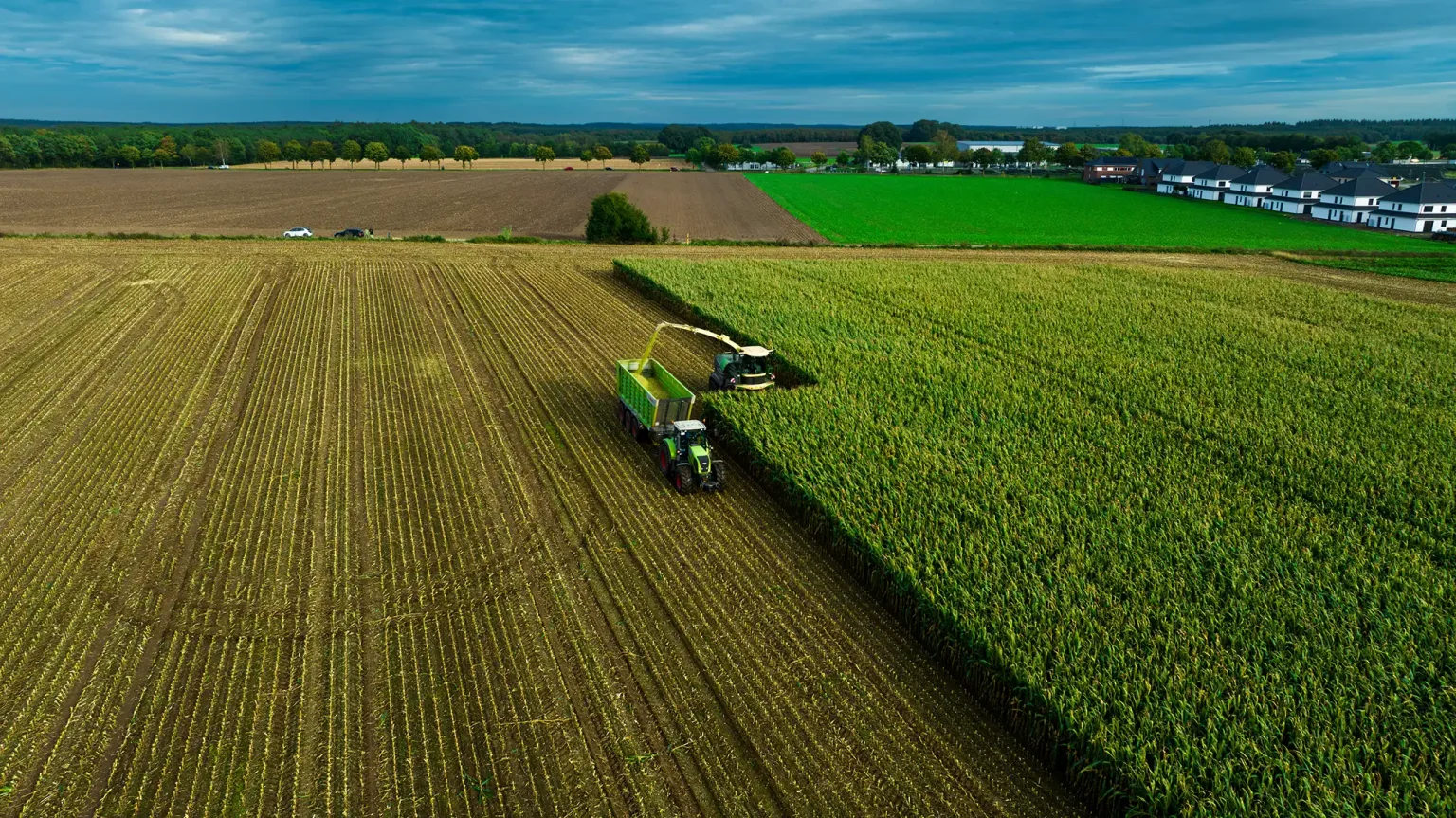
Depending on local infrastructure and the collection partner, this can support anaerobic digestion, biogas production, composting or other approved resource recovery processes.
What diversion is worth
A site diverting 208 tonnes of food waste from landfill over a year avoids up to 145.6 tonnes of CO2e, based on 700 kg CO2e per tonne of landfilled food waste (Clean Energy Regulator, National Greenhouse Accounts Factors, 2024).
The same volume saves roughly 432 cubic metres of landfill space, assuming an average food waste bulk density of 0.48 tonnes per cubic metre (EPA Victoria and CSIRO, 2023).
It is also equivalent to taking about 55 passenger cars off the road for a year (Department of Climate Change, Energy, the Environment and Water, 2024).
Your own figures depend on the volume your centre actually generates, which is what the cloud dashboard is there to measure.
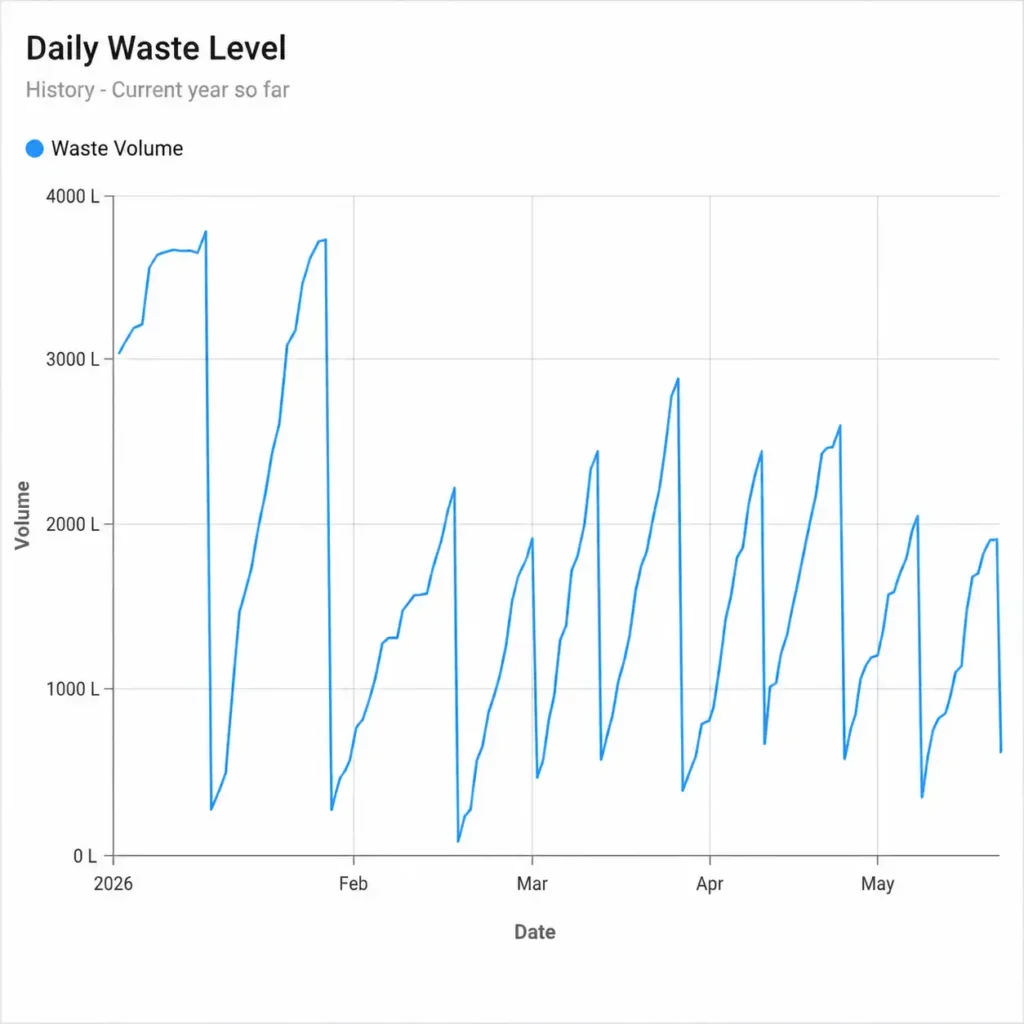
Tank alerts and tenant-level waste reporting
Centre management already runs on data: foot traffic, sales per square metre, energy. Food waste can be measured the same way.
Automated tank alerts: The tank reports its level and notifies you or your waste contractor before it is full, so pumpouts are booked on volume, not on a calendar.
Remote diagnostics: Off-site monitoring supports faster service visibility and system support.
FOB access by tenant: Every load is logged against a tenant, department or user group, which gives the centre a measured basis for cost allocation, tenant recharges and outgoings.
For the centre owner, that is usable data for sustainability reporting and tenant engagement, taken from one of the least visible parts of centre operations.
Food waste rules in NSW: in force since 1 July 2026
Across Australia the pressure around food waste is increasing. The National Food Waste Strategy sets a target to halve Australia's food waste by 2030, and state-based food organics requirements are changing how businesses handle it.
Since 1 July 2026, larger NSW sites must separate food waste from general waste. Stage 1 applies to sites putting out 3,960 litres or more of general waste a week, about six 660 litre bins. Stage 2 in 2028 halves that.
Biofeed supports separation at the source; each site confirms its own obligations, and how they apply to its tenants, with its waste contractor, council and the EPA.
What Biofeed gives a centre is a dedicated, trackable pathway for food waste: separation at the source, sealed storage, collections planned on tank levels, and the landfill and recovered weights that NABERS Waste verification and owner reporting ask for.

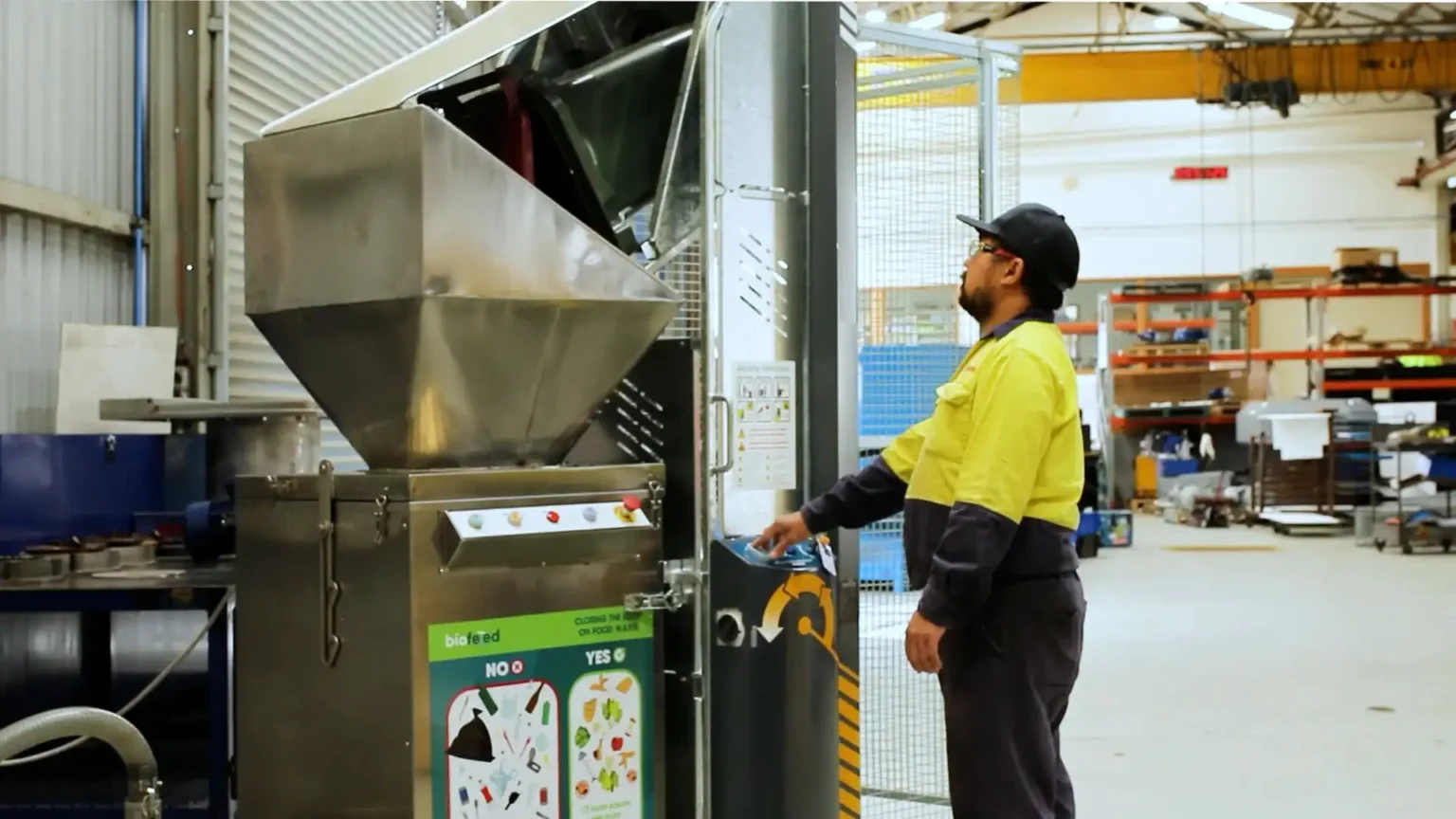
Reducing manual handling and collection costs
Food waste is expensive in a centre because it is hard to move, store and collect. Food waste bins travel further, fill faster and get collected more often than dry waste.
Biofeed changes the handling model. Tenant bins are tipped once, at the unit, and the waste goes to the tank as liquid. Nothing sits on the dock waiting for a truck.
Biofeed works alongside the centre's existing waste contract. General waste, cardboard and recycling keep running as they are; the food waste pumpout is one extra service, booked on tank level.
Collection costs for liquid slurry can be up to 70% cheaper than hard waste collection. With tank alerts, collections match actual usage, so the centre pays for the pumpouts it needs rather than the lifts it has scheduled.
One shopping centre food court, measured
A Sydney shopping centre food court putting out around four tonnes of food waste a week, one Biofeed unit.
6 to 1
collections a week
$0.40 to $0.13
disposal cost per kilo
About $4,320
saved every month
208 tonnes
kept out of landfill a year
Collections went from six food waste bin collections a week to one Biofeed pumpout a week, the saving is after equipment costs, and the bin footprint halved.
Waste volumes, contamination, contract rates and distance to the processing facility all move the result, which is why every site starts with an assessment rather than a quote.
Where Biofeed fits in your centre
Biofeed is configured for a wide range of retail and mixed-use sites, including:
✓
Regional and sub-regional shopping centres with a food court
✓
Neighbourhood centres anchored by a supermarket
✓
Dining precincts, food halls and entertainment precincts
✓
Outlet centres and large-format retail with food tenancies
✓
Mixed-use developments with retail at ground level
✓
Centre-managed loading docks shared by many tenants
The right configuration depends on food waste volume, the number of tenants using it, dock and waste room layout, loading access, plumbing and collection arrangements.
That is why Biofeed is not sold as a one-size-fits-all product. It is an engineered food waste management system configured for the way each centre operates.
Could Biofeed work for your centre?
Tell us roughly how much food waste your food court and tenants put out each week. We'll look at your current collections and dock layout, then show you how Biofeed could reduce bin movements, free up space and save money. The assessment is free, with no obligation.
Or call 1300 552 460.
Frequently Asked Questions
What is a shopping centre food waste management system?
It is the way a centre separates, processes, stores and collects food waste from tenants, the food court and back-of-house areas. Biofeed does this on site: food waste is macerated into a pumpable liquid, held in a sealed tank and collected by vacuum truck for organics recovery.
Can one Biofeed unit serve many tenants?
Yes. Biofeed is designed for shared waste rooms and docks. Tenant bins are tipped into the unit by bin lifter, and optional FOB access records each load against the tenant that made it. The number of units depends on the centre's volume, which the site assessment confirms.
How does Biofeed help allocate food waste costs to tenants?
With FOB access control, each load is logged against a tenant, department or user group. The cloud dashboard reports those volumes, giving centre management a measured basis for cost allocation and tenant recharges instead of an even split.
Where does Biofeed sit in a shopping centre?
Usually in the waste room or at the loading dock, close to where tenant bins arrive. The holding tank can sit beside the unit or in a remote location, with slimline tanks and tank stands available where space is tight. Longer plumbing runs are a proven configuration.
What cannot go into Biofeed?
Packaging, cutlery, napkins, plastics, glass, metal and hard contaminants such as large bones, shells or husks must be kept out. Biofeed is engineered for source-separated organic food waste, not mixed food court rubbish, so tenant sorting and clear signage matter.
Does Biofeed make a centre compliant with NSW food waste rules?
No system does that on its own. Biofeed supports separation at the source, sealed storage and measured diversion. Each centre confirms its own obligations, and how they apply to tenants, with its waste contractor, council and the EPA.
How often is the tank collected?
When it needs to be. The tank reports its level and sends an alert at set points, so the pumpout is booked on volume. At one Sydney shopping centre food court processing around four tonnes a week, six bin collections a week became one pumpout a week.
Where does the food waste go after collection?
A vacuum truck takes the processed liquid to an approved organics recovery facility. Depending on local infrastructure, this can support anaerobic digestion, biogas production, composting or other approved resource recovery processes.