
Turn Food Waste into Measurable Financial and Environmental Gains
Real, Measurable Savings in Collection Costs
One of the most immediate benefits of installing an on-site food waste maceration system is the reduction in waste collection frequency and volume.
By macerating food waste into a semi-solid, pumpable pulp, Biofeed helps significantly reduce:
- The number of bins required on site
- The frequency of heavy vehicle collections
- Manual handling and labour associated with waste movements
- Overflow and contamination risks
For many commercial sites, this translates directly into:
- Lower waste service charges
- Reduced haulage and third-party collection costs
- Fewer truck movements on site
- Less disruption to daily operations
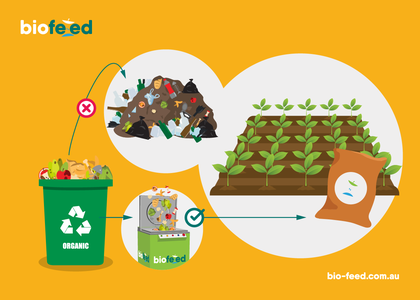
In addition, liquid food organics collected via pump truck services are often charged at different rates compared to traditional bin-based collections. Moving from multiple bin lifts to a pumpable liquid collection model can further improve overall cost efficiency.
Instead of paying to transport heavy, water-laden food waste to landfill or processing facilities, businesses can process organic waste at the source.
Reduce reliance on third-party collection services and lower haulage costs. Curious what the savings could look like?
Check our Biofeed Savings Calculator.
Environmental Impact That Goes Beyond the Bin
Reducing collections doesn’t just save money — it also lowers emissions.
Fewer truck movements mean:
- Reduced diesel consumption
- Lower CO₂ emissions
- Less congestion and noise on site
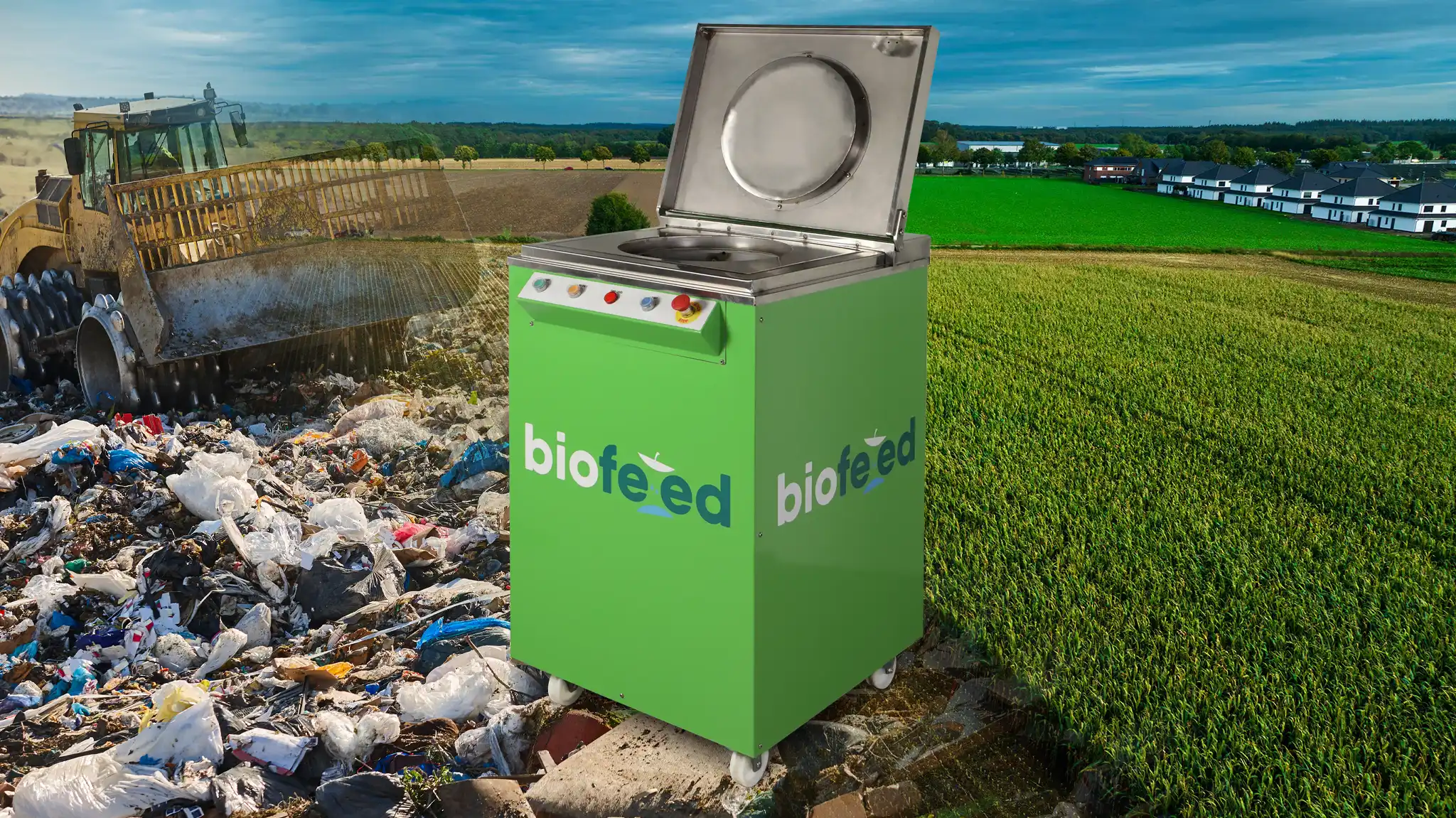
In addition, Biofeed supports improved diversion of organics from landfill, helping businesses meet sustainability targets and prepare for upcoming regulatory changes around food waste management.
The Most Critical Factor: Adoption and Buy-In
The biggest determinant of Biofeed’s success is not the machine itself — it’s how well the organisation adopts the process around it.
To deliver maximum value, businesses need to commit to proper source separation across the entire site.
This starts with understanding:
- Where food waste is generated (kitchens, prep areas, front of house, production lines)
- Who handles the waste at each point
- How it’s placed into bins and transported to the Biofeed
Without this clarity, contamination risks increase and system performance suffers.

Getting Source Separation Right
Effective source separation means ensuring:
- Only approved food waste enters Biofeed bins
- Packaging, cutlery, gloves, and other contaminants are excluded
- Responsibility is clearly defined at the point of waste generation
It’s especially important to consider whether waste is handled by:
- Back-of-house kitchen staff
- Front-of-house teams
- Cleaning or facilities personnel
Clear ownership and simple rules at the point of generation prevent problems later in the process.

The Role of the Biofeed Operator
Every Biofeed installation relies on an operator — and their role varies by business.
The operator is responsible for:
- Confirming correct waste streams are being fed
- Monitoring contamination risk
- Ensuring bins are presented correctly
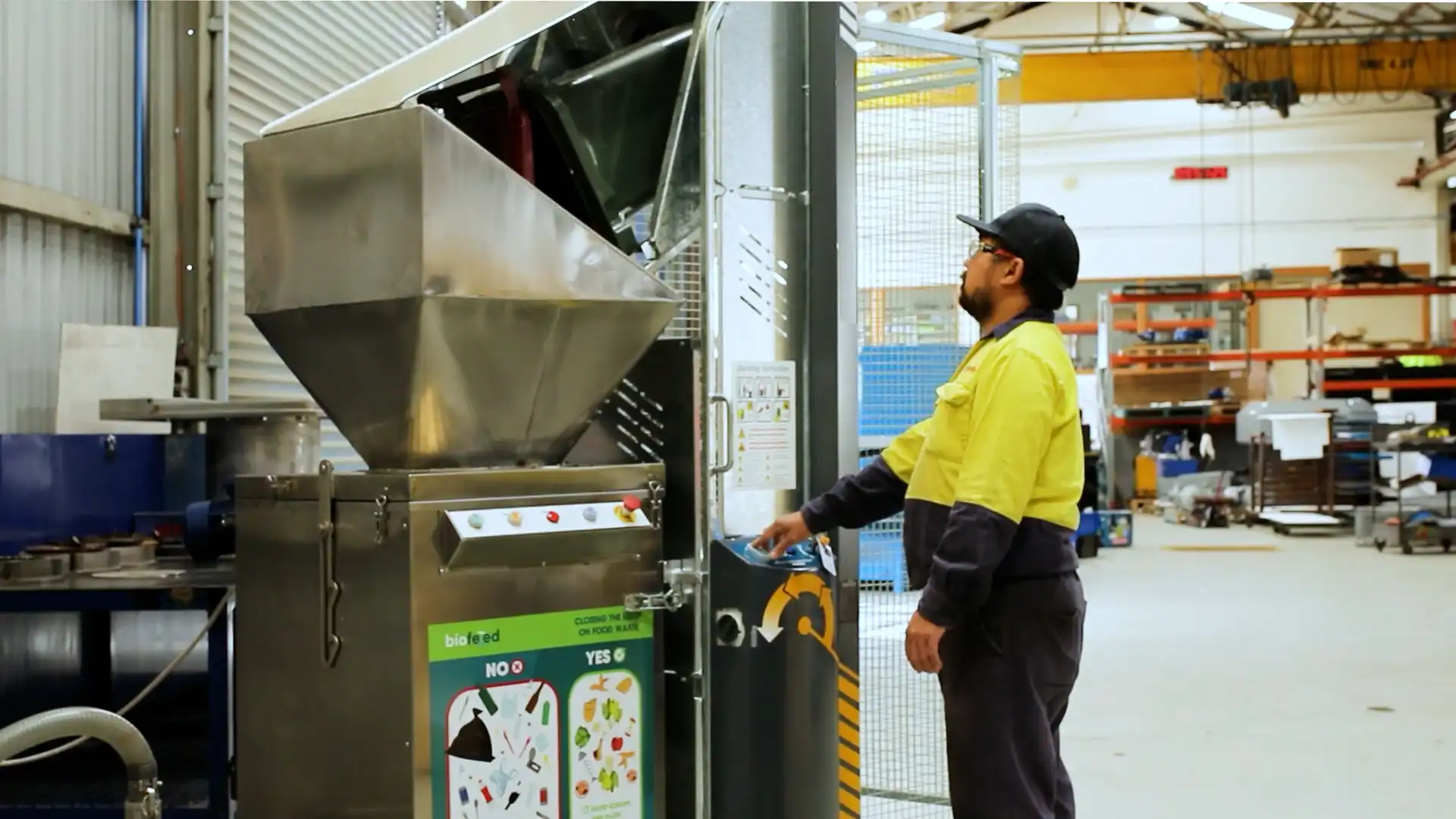
For systems fitted with bin lifters, this role becomes even more important. Once a bin is lifted, the operator cannot see the full contents of the bin before tipping. That means contamination control must happen before the bin ever reaches the Biofeed.
The takeaway is simple: if contamination doesn’t enter the bin, it won’t enter the machine.
Turning Technology into Long-Term Value
Biofeed delivers the strongest outcomes when it’s treated as part of a broader waste management process — not just a piece of equipment.
- Analysing waste generation across your site
- Assigning clear responsibility for source separation
- Training staff at the point of generation
- Supporting operators with the right procedures
Businesses can unlock lasting financial savings, reduce environmental impact, and ensure Biofeed performs reliably for years to come.
If you’d like help reviewing your site setup or understanding how to optimise Biofeed for your operation, feel free to get in touch — we’re happy to help.
Frequently Asked Questions
What is a commercial food waste macerator?
A commercial food waste macerator is a system that grinds and processes organic food waste into a semi-solid, pumpable pulp. This reduces waste volume and allows businesses to manage organic waste more efficiently on-site.
How does a macerator reduce waste collection costs?
Is Biofeed compliant with NSW EPA FOGO requirements?
What types of businesses benefit from on-site food waste processing?
Where can the food waste go after Biofeed?
After processing through Biofeed, the macerated food waste becomes a pumpable organic slurry that can be directed into a range of approved downstream recovery pathways, depending on the waste contractor and local infrastructure.
Common destinations include:
- Commercial composting facilities
- Anaerobic digestion (AD) plants
- Biogas production facilities
- Soil conditioning or land application programs (where approved)
Because the material has already been source-separated and reduced in size, it is typically better suited to organic recovery processes compared to mixed food waste in bins.
The key advantage of Biofeed is that it improves separation quality, reduces contamination risk, and creates a consistent organic feedstock. This gives businesses greater control and flexibility within their broader waste management strategy while supporting landfill diversion and resource recovery outcomes.